


ISO 27001 Gap Analysis: Your EU Compliance Readiness Checklist for 2026

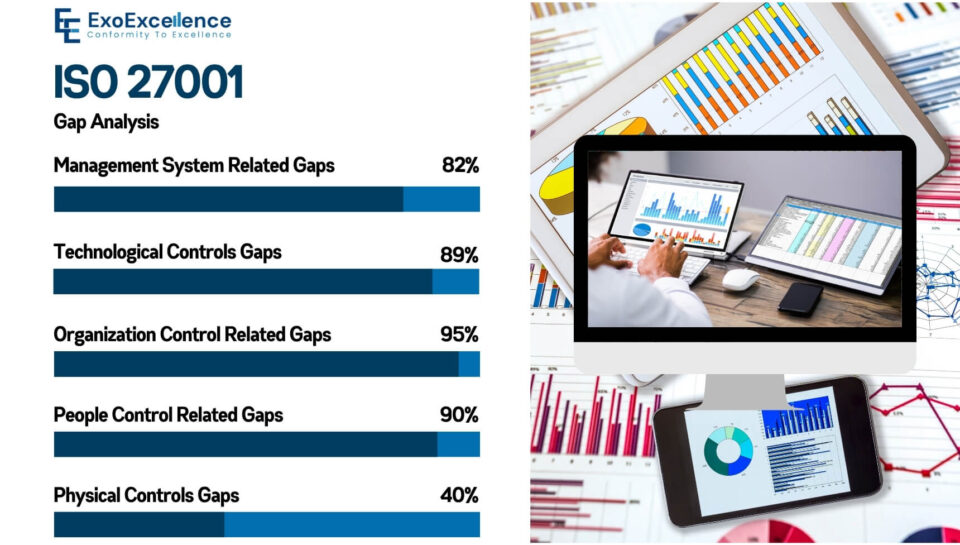
If you run a business in Europe and want ISO 27001, start with a gap analysis. This is a simple check. It compares what you do now for security against the ISO rules. It shows you exactly what needs fixing before you can get certified.
This is vital for companies in the UK, Germany, and Italy. Clients often ask for this certification. It also helps you follow GDPR security rules.
This guide gives you a clear checklist. It includes tables for your plans and policies. It shows you what to look for and how to make real improvements.
Why a Gap Analysis Is the Smart First Step
Many companies try to jump straight into writing policies or implementing controls. That usually leads to wasted time and money. A gap analysis does three important things:
- It shows your current strengths.
- It highlights the real weaknesses and missing pieces.
- It gives you a clear, prioritized roadmap.
In Europe, this step is even more valuable because of GDPR. The gap analysis can map your ISO 27001 controls directly to GDPR Article 32 requirements. This means you build one system that satisfies both standards instead of doing two separate projects.
It usually takes 2–5 weeks, depending on the size of your organization and the support provided to complete the task.
Internal link:
Book a practical ISO 27001 Gap Analysis for EU businesses →
The Importance of an ISO 27001 Gap Analysis?
A thorough gap analysis looks at all parts of ISO 27001:2022. This includes Clauses 4–10 and the 93 controls in Annex A. Key areas that are checked:
- Leadership commitment and policy
- Scope definition
- Risk assessment and treatment
- Annex A controls (organisational, people, physical, technological)
- Internal audit processes
- Management review
- Documented information and records
Doing a gap analysis is a smart move if you want to get certified. Here is why it is so important:
Don’t Fail the Test
Imagine taking a big test without studying for it. Failing the real audit can cost a lot of money and hurt your reputation. A gap analysis works like a practice test. It finds your mistakes early so you can fix them before the official auditor arrives.
Fix the Right Things
You don’t want to spend money fixing things that aren’t broken. This check shows you exactly which parts of your business need help. You can save your energy and money for what really matters. This way, you don’t waste time on areas that are already working well.
Keep Data Safe
Hackers are always looking for ways to steal information. This analysis identifies your security weak spots before the bad guys do. You can fix these holes quickly to protect your secrets. It helps you stop problems before they turn into big disasters.
Be Ready for the Audit
The real audit can be scary if you aren’t ready. Fixing problems early makes the whole process smooth and easy. You won’t have to worry about bad surprises on the big day. When the auditor asks questions, you will have all the right answers ready.
For European companies, auditors also pay attention to how well your ISMS supports GDPR obligations such as data subject rights, breach notification, and privacy by design.
Key Benefits of an ISO 27001 Gap Analysis
1. Stronger Security
Think of a gap analysis as finding the cracks in your armor before a battle starts. By pinpointing exactly where your ISMS is weak, you can fix those issues and build a defense that actually holds up against real-world threats, both inside and outside the company.
2. Smarter Spending
There is no point pouring money into problems you don’t have. A gap analysis stops you from guessing. It shows you precisely where to focus your budget and effort, ensuring you spend money on fixes that matter rather than throwing resources at things that are already working.
3. Audit Readiness
Walking into a certification audit blind is a recipe for stress. A gap analysis acts as a dry run, flagging non-compliance issues early so you can clear them up. It sets you up to walk into the final audit prepared, confident, and ready to pass.
4. Building Trust
When you close your gaps and get certified, you send a clear message: you take data security seriously. That goes a long way with clients, partners, and regulators, turning a technical requirement into a genuine trust-building exercise.
5. The Bottom Line
The numbers back this up. A recent study found that organizations with ISO 27001 certification see a 39% drop in security incidents compared to those without. That isn’t just a statistic; it is proof that doing the work—starting with a gap analysis—makes your business tangibly safer.
Practical Gap Analysis Checklist for EU SMEs
Below are three simple tables you can use as a starting point. You can fill them in during your own gap analysis or with the help of a consultant.
Table 1: Key Policies Checklist
| Policy/Document | Required? | Notes/Gaps | GDPR Tie-in |
| Information Security Policy | Yes | Must be approved by top management | Supports Art. 24 accountability |
| Risk Assessment & Treatment Plan | Yes | Must be documented and reviewed regularly | Links to Art. 35 DPIA |
| Access Control Policy | Yes | Common gap in SMEs | Supports Art. 32 security |
| Incident Response Procedure | Yes | Must include 72-hour notification | Directly supports Art. 33–34 |
| Data Classification & Handling | Recommended | Helps with data minimisation | Supports Art. 5 principles |
Table 2: Common Risk Areas Checklist (EU Context)
| Risk Area | Likelihood | Impact | Current Controls | Recommended Action | Priority |
| Weak access controls (shared passwords) | High | High | Basic passwords | Implement MFA + role-based access | High |
| Unencrypted data in cloud storage | Medium | High | None | Enable encryption at rest & in transit | High |
| Insufficient staff awareness | High | Medium | Ad-hoc training | Regular awareness programme | High |
| Third-party / supplier risks | Medium | High | Basic contracts | Add GDPR clauses + security reviews | Medium |
| Delayed breach notification | Medium | High | No formal process | Create a 72-hour response plan | High |
Table 3: Remediation Plan Template
| Gap Identified | Action Needed | Owner | Deadline | GDPR Link |
| No formal Information Security Policy | Draft and get management approval | CEO | 30 days | Art. 24 accountability |
| Missing MFA on critical systems | Roll out MFA for all admin accounts | IT Manager | 45 days | Art. 32 security |
| No documented risk treatment plan | Create risk register + SoA | Compliance | 60 days | Art. 35 DPIA |
| Outdated incident response plan | Update with 72-hour notification rule | Security Lead | 30 days | Art. 33–34 breach rules |
You can start with these tables today. They give you a clear picture of where you stand and what needs to be fixed.
Phase 1: Before You Start
Most companies trip up right at the start. They try to do everything at once—what we call “boiling the ocean”—and they burn out before they even really begin. Before you dive into spreadsheets or compliance software, you need to nail down three “pre-flight” steps.
Step 1: Define Your Scope
This is your most critical decision. Your scope defines the boundaries of the audit. Do you really need to lock down every laptop in the company? Maybe not. If your marketing team never touches sensitive customer data, you might be able to leave them out of the initial certification.
Founder Tip: Keep your scope tight for Year 1. Focus strictly on the people and systems that handle your product and customer data. You can always expand later, but starting small makes the process survivable.
Step 2: Pick a Leader
You need a “Management Representative”—one person who owns the checklist. In a startup, this is usually the CTO or Head of Engineering.
Warning: Don’t hand this to a junior developer as a side project. Auditors need to see that senior management is involved. If the founders are checked out, you risk a “Major Non-Conformity” for lack of leadership, and your certification will be dead on arrival.
Step 3: Run a Gap Analysis
You can’t fix what you don’t measure. A Gap Analysis is essentially a mock audit on Day 1. It compares your current messy reality against the ISO standard. Do you have an onboarding checklist? Is Multi-Factor Authentication (MFA) on everything? The output becomes your to-do list for the next three months. Without it, you’re flying blind.
Phase 2: The “Big Three” Documents
If you think compliance is just about buying antivirus software, think again. The bulk of your initial work is defining the “rules of the game.” While the standard has plenty of documents, you need to focus on the “Big Three” non-negotiables.
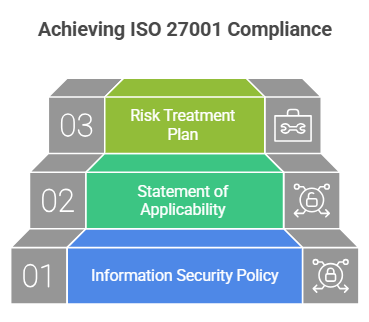
1. The Information Security Policy (ISP)
Think of this as your constitution. It’s a high-level document signed by leadership that says, “We care about security.” It doesn’t need to be 50 pages; it just proves security is a top-down mandate, not just an IT problem.
2. The Statement of Applicability (SoA)
If you remember only one thing, make it this. The SoA is a master list of all 93 controls where you declare, “Yes, we do this,” or “No, we don’t, and here’s why.” For example, a fully remote SaaS company can exclude “Physical Delivery Docks.” Auditors use your SoA as their roadmap. If it’s not in there, they usually won’t check it.
Founder Tip: Don’t write this from scratch. Use templates or a platform to generate the first draft, then customize it. Writing an SoA manually in Word is a waste of 40 hours.
3. The Risk Treatment Plan (RTP)
You found your gaps in Phase 1; this is the plan to fix them. It details who is responsible for each risk and whether you are “mitigating” it (fixing it) or “accepting” it (living with it).
Note: Don’t try to use your ISO 9001 (Quality) templates here. ISO 27001 is strictly about security and risk. A factory operations manual won’t satisfy a cybersecurity auditor.
Phase 3: The Controls (Annex A)
This is where the rubber meets the road. The new ISO 27001 standard groups controls into four logical themes. You likely won’t need all 93, but for a standard SaaS company, you’ll probably need about 80-90% of them.
Theme 1: People Controls
This is about ensuring your team isn’t the weak link. You need background checks for anyone touching production data, and contracts that explicitly state employees must follow security rules. The big one here is Awareness Training—you need proof (logs or certificates) that every employee has completed security training.
Theme 2: Organizational Controls
These are the rules. You need an inventory of assets (even a simple Excel sheet listing laptops is fine for the first audit) and strict Access Control. Follow the “Principle of Least Privilege”—Marketing shouldn’t have admin access to the production database. You also need to vet your vendors; if you use AWS or Slack, you need to review their security certificates annually.
Theme 3: Technological Controls
This is the engineering heavy lifting. Passwords are dead; you need Multi-Factor Authentication (MFA) everywhere—Google, AWS, GitHub—no exceptions. You also need to handle Access Rights immediately when people leave (a “leavers checklist” helps prove this happens within 24 hours). For encryption, standard HTTPS and default cloud encryption usually satisfy the auditors.
Founder Tip: Don’t get overwhelmed. Group the tasks. “Onboarding” covers screening, contracts, and access rights. “Engineering” covers coding, logging, and encryption. Tackle them in batches.
Theme 4: Physical Controls
This covers the real-world stuff. If you have an office, auditors love checking for “Clear Desk and Clear Screen” policies—meaning no sticky notes with passwords and no unlocked laptops at lunch. If you are 100% cloud-based, you note that in your SoA and rely on your cloud provider’s certifications for the physical server security.
Phase 4: The Audit
You’ve built the controls and written the policies. Now it’s time for the exam.
Step 1: The Internal Audit (The Rehearsal)
Before you call in an external certification body, you must do an internal audit. It’s a mandatory requirement. You can’t audit yourself, so use an independent employee or a consultant. If they find issues, fix them now. It’s much cheaper to fail a rehearsal than the real thing.
Step 2: The Stage 1 Audit (Document Review)
Think of this as the “Desktop Audit.” The auditor checks your paperwork to see if your design is sound. They aren’t checking if it works yet; they are checking if it exists. If you pass, you get the green light for the main event.
Step 3: The Stage 2 Audit (Evidence Review)
This is the main event. The auditor visits to see if you actually follow your own rules. They will ask for evidence.
- “You said you do background checks? Show me the last three reports.”
- “You said you review logs? Show me the ticket where you flagged a suspicious login.”
Founder Tip: During Stage 2, only answer the question asked. If they ask for “Evidence A,” give them exactly that. Don’t volunteer “Evidence B and C,” or you might accidentally open a can of worms you weren’t prepared for.
Pass Stage 2, and congratulations—you’re recommended for certification.
Common Gaps Found in European SMEs
From working with UK, German, and Italian companies, these are the most frequent gaps:
- Access Controls: Many SMEs still rely on shared passwords or give too many people admin rights. This is one of the easiest gaps to close, but one of the most common findings during audits.
- Risk Assessment Companies often do a high-level risk list but fail to link it properly to Annex A controls or create a Statement of Applicability.
- Documentation Policies exist but are not reviewed regularly or communicated to staff.
- Third-Party Management Supplier contracts rarely include proper security or GDPR clauses.
- Incident Response: Many organisations do not have a clear 72-hour breach notification process.
In Italy, auditors also look closely at how well the ISMS aligns with the national Privacy Code alongside GDPR.
Internal link:
Download our free ISO 27001 Gap Analysis Checklist for EU SMEs →
How to Turn Your Gap Analysis into Action
Once you have the results, create a simple remediation plan. Prioritise high-risk gaps first. Assign clear owners and realistic deadlines. Track progress in regular management reviews.
Many European SMEs complete the main remediation work in 4–8 months. Then they move to internal audits and certification readiness.
Internal link:
ISO 27001 Implementation Support for UK, Germany & Italy →
Expected Benefits and ROI
A well-executed gap analysis and remediation plan usually delivers clear returns:
- Stronger security posture and fewer incidents
- Better GDPR compliance evidence (especially Article 32)
- Improved chances of winning enterprise contracts
- Potential reduction in cyber insurance premiums (10–25%)
- Increased customer and partner trust
European companies that complete the process often report that the biggest benefit is internal confidence — knowing their security is not just reactive but properly managed.
Final Thoughts
A gap analysis is the smartest first step toward ISO 27001 certification. It saves time, reduces costs, and prevents unpleasant surprises during the official audit.
For European SMEs, it also provides a practical way to strengthen GDPR compliance at the same time. Start with the tables above. Be honest about your current state. Then build a clear plan to close the gaps.
If you need help interpreting your own gap results or want a second opinion on your readiness, feel free to reach out.
Many businesses in the UK, Germany, and Italy have used this approach successfully. The journey to ISO 27001 does not have to be complicated. A good gap analysis makes the rest of the process much more manageable.